
What Is a Word? | Psychology Currently
While it is normally agreed that language differentiates human beings from other animals, there’s much less settlement as to why. Several scholars, notably Noam Chomsky, have argued that it’s grammar that makes individuals unique: the skill to build an limitless number of meanings by combining a finite amount of words. I agree, but I would include that, since grammar could not exist without having words and phrases, words are also uniquely human.
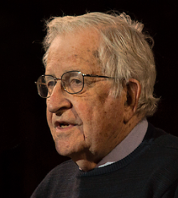
Noam Chomsky
Resource: Wikipedia
Curiously, there’s significantly less agreement about the status of terms. In a extensively cited post, Chomsky and colleagues outlined two “faculties of language”: a wide school that includes, among other talents, words and phrases and principles, and a slender school that only features grammar (Hauser et al., 2002). In that framework, they concluded that the narrow school is uniquely human.
Can animals learn terms?
As proof that animals use text, they cited analysis on the communicative qualities of chimpanzees, monkeys, dolphins, and birds. Other content declare that monkeys use words and phrases when they warn other monkeys about the existence of diverse forms of predators and that parrots can imitate human terms. Remarkably, none of those scientific tests outlined text.
Pertaining to chimpanzees, Chomsky, amid other individuals, cited the skill of chimpanzees to create words and phrases. The words and phrases in question weren’t spoken due to the fact of the constraints of an ape’s articulatory equipment. Apes cannot make the seems that comprise vocal languages. Instead, they ended up experienced to use gestures that were being very similar to the indicators of American Sign Language, a language utilized by hundreds of countless numbers of deaf people today. Chimpanzees have been also experienced to touch “lexigrams,” symbols composed of diverse colours and geometric styles, each getting its have meaning.
In other places, I have argued that the sole functionality of an ape’s use of symbols is to acquire particular rewards. In each individual instance, the ape’s overall performance amounted to nothing at all more than perfectly-skilled motor acts that were being employed in a ritualized fashion (Terrace, 1985). I have also famous other discrepancies concerning the utterances of apes and human infants. The utterances of human infants are spontaneous and bi-directional. Ape utterances are neither. Most significant is an ape’s lack of ability to identify objects (Terrace, 2019).
These distinctions are illustrated by the example of educating an toddler or an ape to utter the word “doggy.” Suppose the infant looks at a dog and utters “pet dog.” Her dad or mum may reply, “Great pet,” “Huge canine,” or “No, that is a cat.”
An ape is proven a puppy, or a image of a doggy. In buy to acquire food items or drink, the ape signs “canine,” or touches the lexigram for pet. For the ape, the sight of a canine is merely a cue for earning a reaction to receive a actual physical reward. By distinction, the human infant names the pet dog, for which her dad or mum responds socially, frequently verbally, but not ordinarily with a actual physical reward.
In this instance, the ape did not transmit facts to the listener. Indeed, there was no listener. Pushing a button on a vending machine would be just as effective. This kind of responses are known as imperatives, uni-directional utterances that are motivated by physical benefits.
Imperatives are not limited to apes. Human infants also utter imperatives, for illustration, “up,” “milk,” and so on. But if imperatives ended up the only type of utterance an infant could make, she could not be considered to have acquired language. That is since imperatives represent a minuscule portion of human vocabulary. The broad the vast majority of their utterances are what linguists refer to as declaratives, all of which are conversational. A speaker feedback about some aspect of the environment and the listener responds. The listener possibly agrees with the speaker, elaborates his utterance, or queries it.
What are we to make of the observation that a chimpanzee will discover to indication “banana” to ask for just one? Or of a chimpanzee who touches a specific lexigram in anticipation of a reward? Do those signals or lexigrams qualify as words?
To solution that problem, we want to outline phrases. Dictionary definitions are only reasonably handy for examining a chimpanzee’s utterances. That’s simply because dictionaries explain a human’s use of phrases. For case in point, a person dictionary defines a word as, “a solitary distinctive meaningful factor of speech.” Significant is outlined as, “the nonlinguistic cultural correlate, reference…of a linguistic type.”
Up to a level, that definition aids by citing a nonlinguistic reference, these kinds of as a human being, object, or function. But it does not specify the course of the utterance in problem. It could be a declarative, element of a conversation in which there is an trade of info between a speaker and a listener, or it could be uni-directional as, for instance, a request for a reward.
A definition of a term
For these explanations, I define a phrase as an arbitrary image that is made use of conversationally, that is, declaratively. This definition excludes cries, whimpers, and other unlearned vocalizations that infants make. It also excludes imperatives, and is regular with declarative pointing, a universal antecedent of words and phrases.
Declarative pointing, which is frequently interpreted as a non-verbal reaction, has been noticed in all cultures. Pointing happens a thirty day period or two just before an toddler begins to refer to objects verbally. No non-human primate has at any time been observed to stage in their natural atmosphere. Though there are reports of pointing by apes that have been lifted by individuals, these kinds of pointing is vital, solely in the provider of acquiring a physical reward.
Shortly immediately after an infant begins to position to objects, she begins to name them. When, for illustration, she points to a doggy, her caretaker responds “canine” and the toddler imitates that utterance vocally. The gain of the utterance “dog” more than pointing is that it is a more exact sort of reference. If, for illustration, the pet was up coming to a tree, and an toddler pointed in that course, we wouldn’t know if she pointed to the canine or to the tree.
Since the variety of rewards just one can request is tiny, there is an upper limit to the quantity of imperatives. In all of the thousands of extant human languages, nonetheless, the selection of declarative terms is unlimited. It is generally probable to conceive of a new term to name a certain object, motion, or attribute. It is that feature that allowed our ancestors to refer to objects that had been not quickly current, to earlier and long term functions, and to imaginary objects. In short, the changeover from animal interaction to declarative text marked the beginning of verbal society.
Language is deemed to be a single of the nine important transitions of evolution (Maynard Smith & Szathmáry, 1995). Without the need of disagreeing with that claim, I would argue that language, as we know it, essential two key transitions. Why two? Mainly because language is as well intricate to have been selected from animal communication in one move. It is challenging plenty of to clarify the transition of animal conversation to words and phrases without having the complexity of grammar.
The to start with changeover was a change from fastened, uni-directional psychological indicators to bi-directional words. The second was the addition of grammatical procedures for arranging terms. It was that transition, the capability to produce an indefinitely huge amount of meanings from a finite set of words and phrases, that Chomsky argued was the essence of language. It need to be clear, even so, that the 2nd transition could not have happened without having text.
Defining a word as an arbitrary symbol that is utilised conversationally clarifies the initial transition. That transition required a qualitatively new sort of communication, 1 that supplemented the compact repertoire of psychological alerts that animals employed for tens of millions of many years. As an alternative of only becoming equipped to manipulate another’s behavior, current ancestors started to inform another about mutually essential occasions. This could only be performed with declarative utterances.


